Your privacy matters. We’ve updated our policies effective March 24, 2026.

LEARN MORE

COBOL modernization and migration solutions

COBOL systems are mission-critical procedural platforms with tightly coupled batch orchestration, data structures, and transaction semantics that standard rewrites and superficial conversions fail to preserve.

Synchrony’s Modernization Lifecycle Platform (MLP) integrates industry-proven transformation tooling with structured validation to enable incremental COBOL modernization, from interface modernization to full replatforming.

Our approach delivers:

  • Preservation of computational precision and transactional integrity
  • No code freezes during modernization
  • Cloud-native architectures with modern integration and APIs
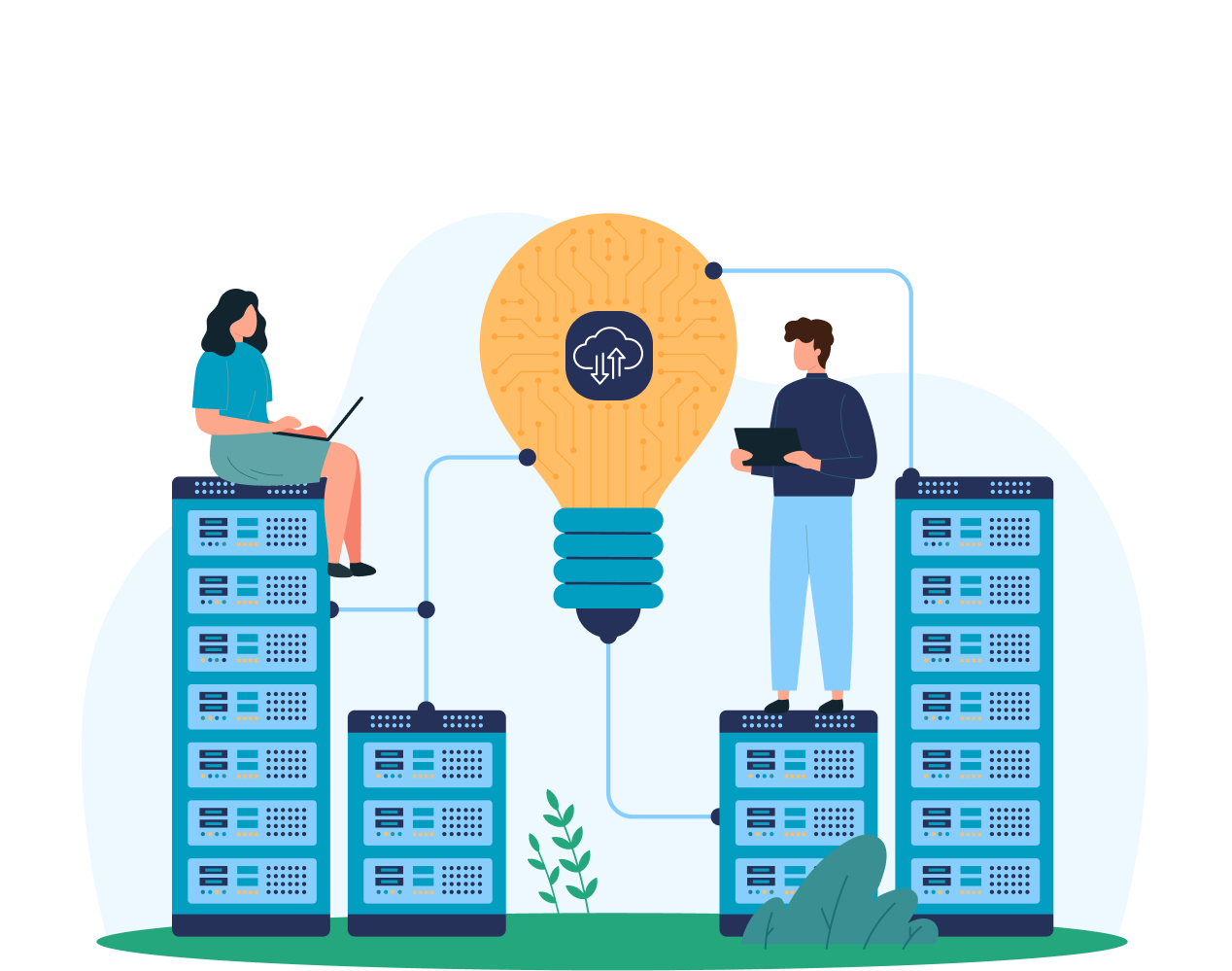
COBOL cloud migration illustration depicting IT specialists working with server hardware and a central lightbulb icon showing a cloud with synchronization arrows.
COBOL modernization emblem featuring a teal circular border and a cloud icon with upload and download arrows, symbolizing mainframe-to-cloud migration.

Why modernize COBOL systems?

COBOL still runs much of the world’s banking, insurance, and government infrastructure. It processes billions of transactions every day and has proven remarkably stable over decades.

Yet many COBOL systems live on tightly coupled mainframe environments where expertise is concentrated in a shrinking talent pool, infrastructure costs remain high, and integration with APIs, cloud platforms, and modern security tooling is difficult.

These environments were built for reliability. Modernizing them means preserving that reliability while changing how they’re deployed and integrated.

Why COBOL modernization requires a specialized approach

COBOL systems are tightly integrated mainframe environments that combine procedural execution, batch orchestration, structured data models, and transaction-processing frameworks.

Successful modernization requires precision across the following areas:

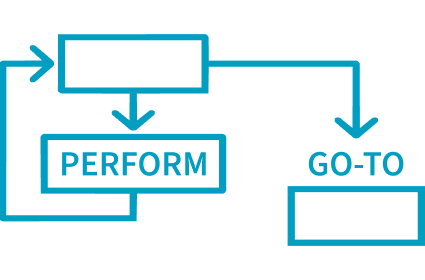
Software logic flowchart illustrating procedural programming paths using PERFORM loops and GO TO branching statements.

Procedural execution

COBOL logic executes through paragraph hierarchies and shared structures that shape how programs actually run.

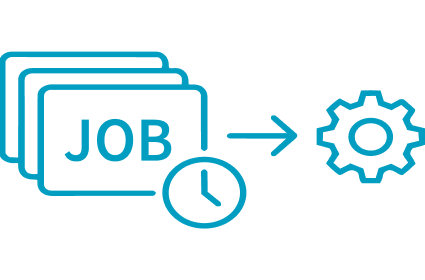
JCL (Job Control Language) batch orchestration diagram showing a scheduled job sequence moving toward an automated processing engine.

JCL-driven batch

Batch workloads depend on job sequencing, file dependencies, and runtime timing that define operational behavior.

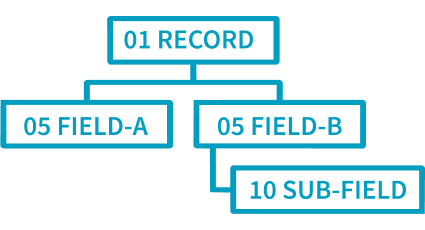
Hierarchical tree diagram of COBOL data structures, detailing the relationship between records, fields, and sub-fields.

Record architecture

Hierarchical record layouts and packed numeric formats directly influence data interpretation and computational outcomes.

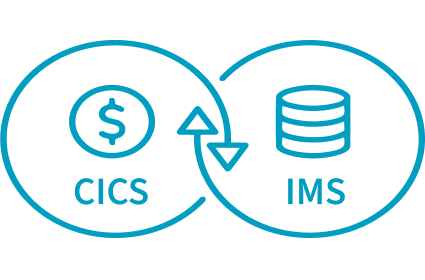
Logic diagram showing the bidirectional synchronization between CICS and IMS for enterprise transaction processing.

CICS and IMS transactions

Online processing relies on defined commit scopes and transaction managers that enforce consistency boundaries.

These characteristics determine how COBOL programs guarantee computational correctness and transactional consistency.

Solving COBOL modernization challenges

Synchrony provides the orchestration, tooling coordination, and validation required to modernize COBOL environments without sacrificing system behavior.

Successful modernization requires precision across the following areas:

1. Incremental modernization without disruption

COBOL systems often support critical batch and transaction workloads that cannot be paused or rewritten.

Synchrony orchestrates tool-driven transformation within workflows so modernization can proceed without code freezes or operational interruption.

Result: Continuous modernization with preserved system behavior.

2. Interface modernization (Facelift)

User interfaces and integration layers can be modernized independently of stable core logic.

Synchrony enables Facelift approaches that modernize presentation and access layers while core COBOL applications continue to operate.

Result: Modern interfaces without rewriting proven business logic.

3. Behavioral equivalence validated

COBOL applications encode decades of business rules that must be preserved.

Synchrony applies traceability and validation workflows to confirm that transformed code maintains original computational outcomes.

Result: Verified functional equivalence.

4. Batch and transaction continuity

COBOL systems rely on established batch scheduling and transaction management environments.

Synchrony coordinates orchestration and manages dependencies during modernization to maintain runtime consistency.

Result: Operational stability throughout transformation.

5. Platform dependencies managed

Mainframe runtimes, databases, and file systems shape COBOL execution behavior.

Synchrony identifies and manages these dependencies within the modernization lifecycle to support controlled platform evolution.

Result: Modern deployment without breaking system integrity.

What next?

COBOL systems can modernize incrementally without rewriting proven business logic or disrupting critical operations.

Begin with a readiness assessment to understand batch dependencies, transaction flows, and interface modernization options, or learn how our Modernization Lifecycle Platform (MLP) enables structured COBOL transformation.