Share


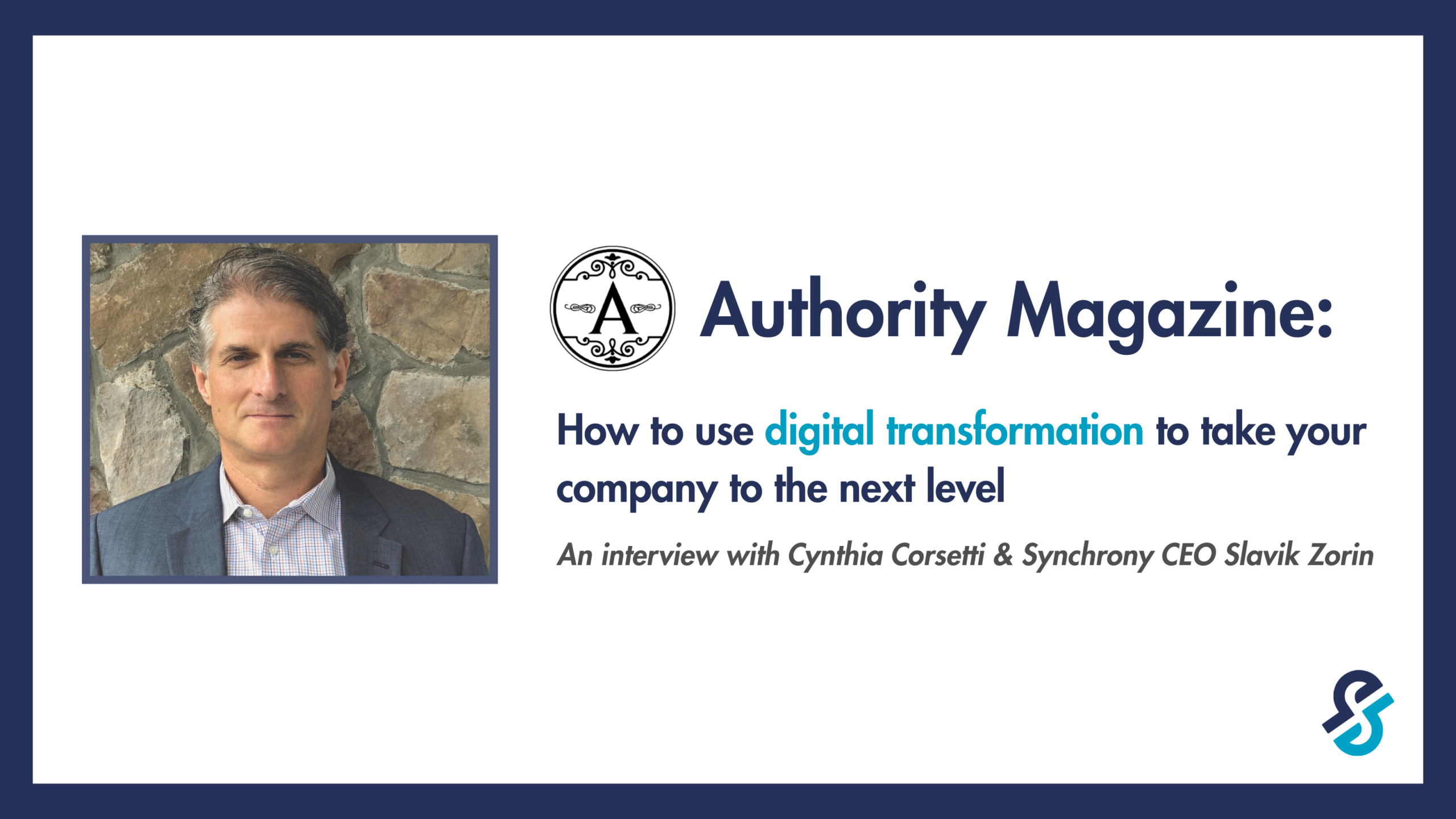
This interview with Cynthia Corsetti and Synchrony CEO Slavik Zorin was originally published by Authority Magazine. You can read the original article here.
…
Digital transformation has become a crucial component for businesses striving to stay competitive and relevant in today’s rapidly evolving landscape. As technology continues to shape industries and redefine business models, companies must adapt and leverage digital tools and strategies to unlock new opportunities for growth and innovation. In this interview series, we aim to explore various aspects of digital transformation, including best practices, challenges, success stories, and expert insights. We are talking to thought leaders, industry experts, entrepreneurs, technology innovators, and executives who have firsthand experience in driving digital transformation initiatives within their organizations.
As part of this series, we had the pleasure of interviewing Slavik Zorin.
Slavik Zorin is CEO & Co-Founder of Synchrony Systems — he is a recognized expert in legacy application modernization with more than 30 years of hands-on experience leading complex projects across financial services, insurance, government, and global enterprises. Slavik is the visionary behind Modernization Lifecycle Management and Synchrony’s Modernization Lifecycle Platform (MLP). His work enables organizations to transform legacy systems into modern architectures with speed, accuracy, and traceability.
Thank you so much for joining us in this interview series. Before we dive in, our readers would love to “get to know you” a bit better. Can you tell us a bit about your ‘backstory’ and how you got started?
Hi, Cynthia! Thank you for having me today to share my background and discuss the digital transformation space. My company, Synchrony Systems, helps businesses upgrade their old, critical software systems to modern, efficient platforms. We use a combination of automation and AI-assisted tools to ensure the transition is smooth, cost-effective, and minimizes disruption to daily operations.
I often say my entire career has been lived in the before-and-after of software. I started as an independent consultant in the early days of software development, working with a programming language called Smalltalk. This led to a partnership with IBM, where we helped companies move their systems into IBM’s environment. Our first major project in the early 90s showed us the need for automation, and we began developing tools to make these transitions smoother.
As the industry evolved, we had to continually reinvent ourselves, learning each new technology wave. Those experiences ultimately shaped our focus today: orchestrated, low-risk legacy application modernization through our Modernization Lifecycle Platform (MLP).
In essence, my journey has centered on turning outdated systems into modern, efficient applications that keep businesses moving forward.
Can you share a story about the funniest mistake you made when you were first starting? Can you tell us what lessons or ‘takeaways’ you learned from that?
Back in the early days of our company in the late 90s/early 2000s, when we were still transitioning from being a pure Smalltalk shop into a modernization and migration firm, I was asked to deliver a highly customized three‑day training course for one of our biggest financial clients at the time. Their chief architect, an incredibly bright and respected leader, had spent years building an advanced new framework for their commercial loan system. My job was to train their engineers how to use it.
Because the material was complex and the timeline was impossibly tight, I pulled multiple all‑nighters building the course and preparing the printed materials. By the time the first day of training arrived, I had been awake far longer than any sane human should have been. And, then it happened. In the middle of delivering the course, right there in front of the client and their entire technical team, I fell asleep. Literally nodded off mid‑session.
Our client, thankfully understanding just how much effort had put into preparing the training, quietly took over the class while I slept… in front of everyone. During a break, I realized what had happened. I sat red‑faced, while the room full of engineers tried politely, and unsuccessfully, not to laugh.
The good news? The training went on and the relationship didn’t just survive. It thrived for years afterward. They even eventually hired us to migrate to the very system they once tried to rewrite themselves. One big takeaway from that experience is that strong relationships can help you weather even the most embarrassing moments.
None of us are able to achieve success without some help along the way. Is a particular person who you are grateful for who helped get you to where you are? Can you share a story?
From the very beginning, I built this company alongside my wife, Regena, who has been an essential partner in every sense. While I focus on the engineering and technical vision, she oversees the entire business backbone. From running finance, legal, contracting, accounting, and HR, she essentially manages all of the operational infrastructure that keeps us moving forward.
In addition, our Synchrony team is made up of talented engineers and long‑tenured experts. Even as a small company where everyone wears multiple hats, our employees and contractors form a group of highly skilled, engineering‑driven teams that have grown alongside the company’s evolving modernization mission.
Is there a particular book, podcast, or film that made a significant impact on you? Can you share a story or explain why it resonated with you so much?
A thinker who had a huge impact on me was author and journalist, Christopher Hitchens. I discovered him by accident through a debate podcast, and I was immediately blown away by his intellect, independence, and clarity of thought. I ended up listening to everything he ever recorded and reading all his books. His ability to stand his ground, think deeply, and communicate honestly has shaped how I approach conversations, decisions, and relationships both personally and in business.
Are you working on any new, exciting projects now? How do you think that might help people?
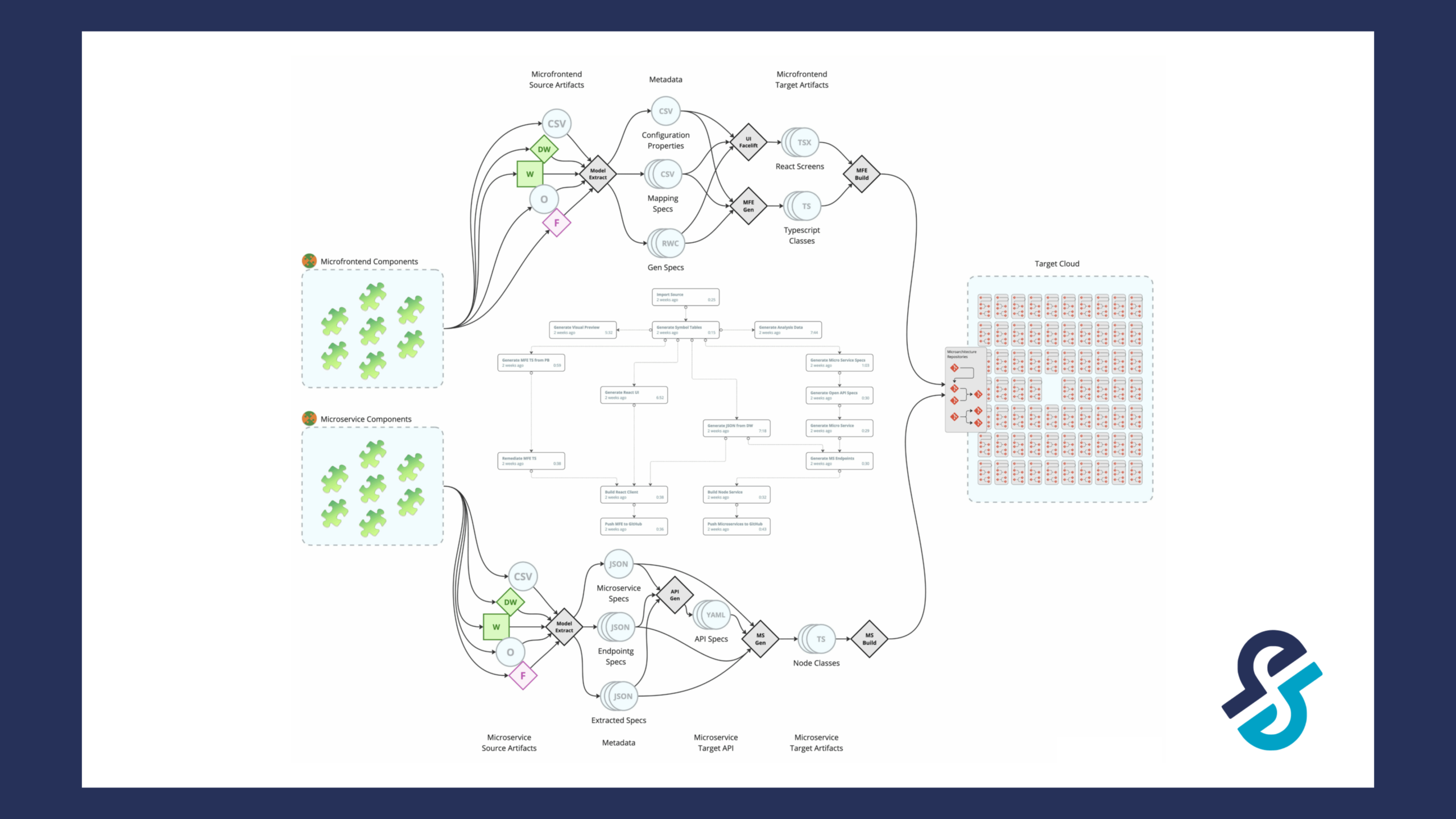
What excites me most right now is the evolution of our Modernization Lifecycle Platform (MLP). MLP is our proprietary platform designed to help organizations upgrade their old applications in a structured and transparent way. It covers everything from analyzing the current system to transforming the code, testing, and deploying the new system. By standardizing this process and integrating automation, MLP significantly reduces the risks and costs that usually come with modernization projects.
The next evolution of MLP is particularly exciting because it introduces AI-assisted tools to support in the initial modernization readiness assessment phase of the process. The goal is to make modernization something companies can manage confidently, without it being a disruptive, once-a-decade crisis. This evolution empowers businesses to keep up with new technologies and digital demands, all while ensuring their critical systems continue running smoothly behind the scenes.
Thank you for all that. Let’s now turn to the main focus of our discussion about Digital Transformation. Digital transformation can mean many things to many people, from your perspective, how do you define digital transformation in your industry?
For us, digital transformation means modernizing mission‑critical legacy applications. That means transforming outdated systems into modern, scalable technologies that better support today’s digital business demands. What’s unique to Synchrony is our focus on the core systems the business actually runs on. Many of these systems were built decades ago in languages like Smalltalk, PowerBuilder, EGL, and mainframe environments. Long before Zero Trust security, modern architectures, or continuous delivery existed.
It’s similar to home improvement. You can’t just upgrade the aesthetics — you have to maintain and correct old wiring, plumbing, insulation, and other invisible aspects that keep the home running. When modernization is done correctly, organizations benefit from stronger cybersecurity, more automated compliance, and more interoperability and extensibility that support continuous improvement.
Which companies can most benefit from a Digital Transformation?
Any company that is running important business operations on decades-old applications and software will benefit from a digital transformation. Across the globe, this is a frequent issue in financial services, government, insurance, utilities, higher-ed and healthcare sectors. Companies in those industries are often particularly vulnerable to retiring experts, increasing maintenance costs, growing regulatory demands, and systems that are difficult to integrate with modern platforms. Neglecting these systems leads to compounding technical debt that can put your whole enterprise at risk.
Has integrating Digital Transformation been a challenging process for some companies? What are the challenges? How do you help resolve them?
Most companies underestimate the complexity of their legacy systems, and we often see the same issues crop up repeatedly.
One common problem is decision paralysis and delay. Organizations know they need to modernize, but they keep delaying it. Those delays also mean these critical projects often lose internal champions to turnover and attrition, stalling momentum.
Overconfidence in in-house rewrites is another frequent challenge. Many companies underestimate the complexity of modernization and assume their in-house teams can handle it alongside their other responsibility. This leads to multi-year delays, blown budgets and no cohesive plans. Or, similarly, they rely too heavily on AI tools that aren’t equipped to properly handle such an enormous task.
Finally, perhaps the most frustrating challenge we see is when the true cost of technical debt is discovered too late. Deferred maintenance turns the already challenging task of modernization into a cost-prohibitive crisis.
Our platform and approach are specifically designed to address these challenges and help businesses modernize quickly without the disruption to the business that comes from fully rewriting their applications.
Ok. Thank you. Here is the primary question of our discussion. Based on your experience and success, what are “Five Ways a Company Can Use Digital Transformation To Take It To The Next Level”? Please share a story or an example for each.
1. Make Legacy Systems Intelligible Before You Touch Them
The biggest mistake companies make is jumping straight into rewriting or replacing systems they don’t fully understand. The first step is always a deep analysis: counting screens, functions, dependencies, integrations, and understanding how the application actually behaves in production. This creates a data-driven foundation for planning.
For example, in our modernization projects, we ingest millions of lines of existing code and generate a complete application inventory. This approach keeps estimates within 20–30% of reality, instead of being off by 300–400% like many manual rewrites.
2. Use Orchestrated, Automated Modernization, Not Risky Rewrites
Manual rewrites are slow, risky, and nearly impossible to estimate accurately. Orchestrated, rules-based automation gives you consistency, traceability, and repeatability. Our tools function like compilers: we take legacy code as input and generate modernized equivalents, reducing both cost and risk.
For instance, our earliest work with IBM on Smalltalk migrations taught us this valuable lesson. By building migration tools instead of relying on manual rewrites, IBM was able to resell our software for large projects where automation dramatically reduced project timelines and improved predictability. They built over a $100 million modernization business that our technical solutions were a part of.
3. Modernize What Matters — And Keep In Mind, Not Everything Matters
Not all legacy logic is bad. Some should be preserved, some refactored, and some removed entirely. Selective modernization minimizes disruption while maximizing ROI. It focuses effort on the parts of the system that matter most to the business.
For instance, applying Pareto’s Principle often reveals that roughly 20% of an application delivers 80% of its business value. By modernizing that high‑impact portion first, organizations can deliver results faster, reduce risk, and avoid rewriting low‑value areas. This targeted approach creates early wins by modernizing a heavily used functionality without taking on the full cost and complexity of modernizing the entire system at once.
4. Adopt Continuous Modernization to Control Technical Debt
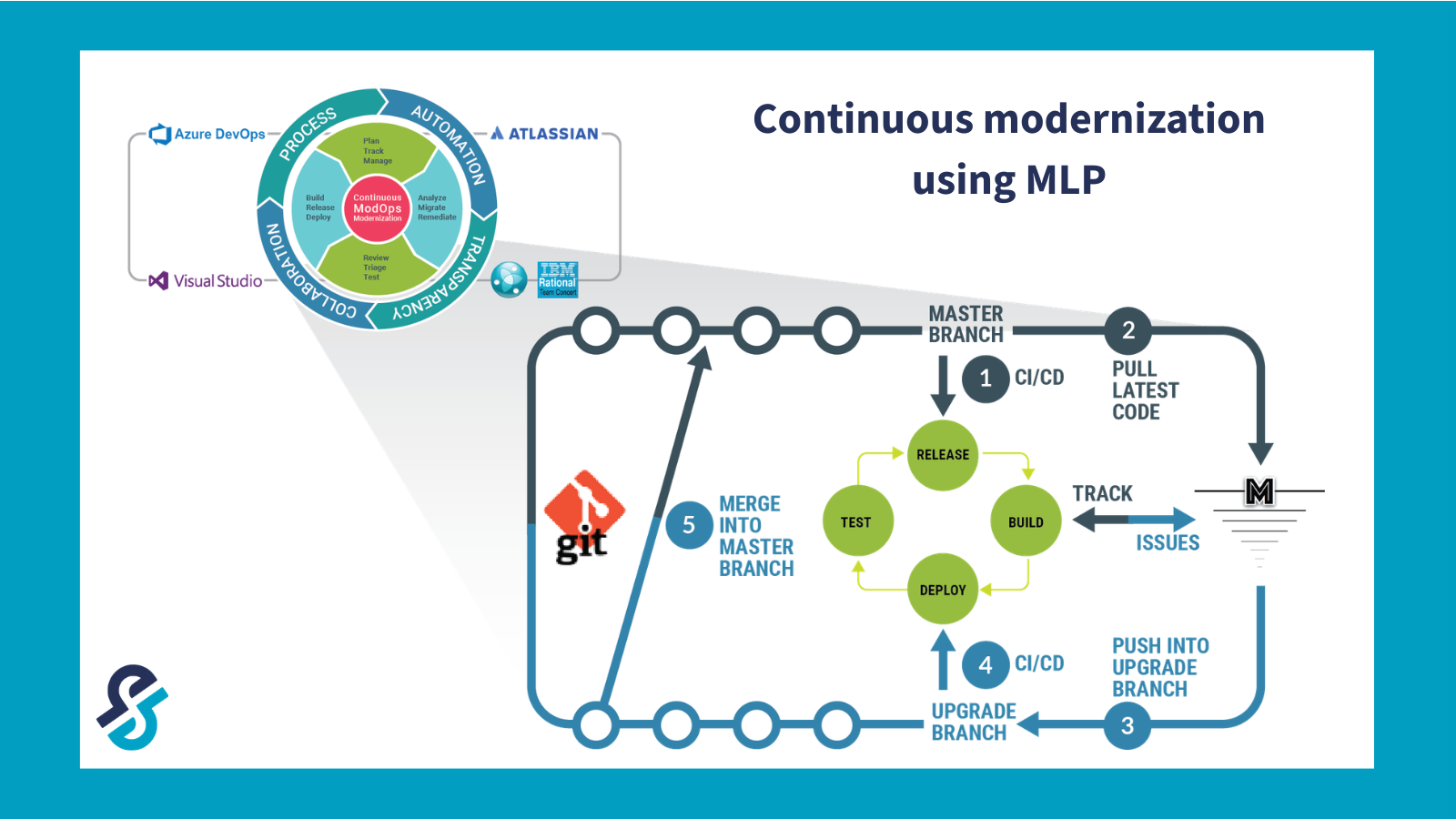
Instead of waiting until systems become dangerously outdated, organizations should integrate incremental updates into their regular development workflow. Continuous Modernization (CM) reduces upgrade complexity, improves security, and prevents technical debt from snowballing.
To illustrate, in the CM model, upgrades run in isolated branches and are automatically tested. Issues are caught early, when they’re smaller and less expensive, rather than discovered years later when outdated dependencies force a massive overhaul. This approach can extend the lifespan of mission-critical systems while keeping costs predictable.
5. Treat Security as an Architectural Outcome, Not a Patch Job
Legacy systems were never designed for Zero Trust security, identity-centric access, or real-time observability. Modernization makes systems visible, traceable, and structurally capable of continuous security and compliance. You can’t secure what you can’t see.
Consider the following example. We work with companies to modernize legacy platforms that have become opaque and tightly coupled. By moving to service‑based architectures with clear trust boundaries and least‑privilege access, they shift from reactive patching to security that’s engineered, validated, and auditable.
In your opinion, how can companies best create a “culture of innovation” in order to create new competitive advantages?
A culture of innovation starts with accepting a simple reality that today’s modern system is tomorrow’s legacy. If teams focus on this mission, innovation becomes a continuous discipline rather than a one-time initiative.
From our experience, companies innovate best when they treat modernization like engineering and not improvising. This means transparent workflows, measurable progress, clear architecture, and tools that help teams understand their systems. Our platform makes all modernization activity visible, from test results to automation runs, to defect patterns, which encourages learning and faster iteration.
Innovation thrives when teams feel empowered to evolve systems continuously, supported by data, tooling, and processes that reduce risk and uncertainty.
Can you please give us your favorite “Life Lesson Quote”? Can you share how that was relevant to you in your life?
A quote I often come back to is: “Today’s state of the art system is tomorrow’s legacy.”
After 30 years in this field, I’ve seen every modern platform eventually become the next modernization challenge: Smalltalk, EGL, PowerBuilder, and early Java frameworks. That reality shaped my entire career. It taught me to treat modernization as something continuous and engineered, not a one-time event. It’s why we built structured tools, automation, and ultimately a full Modernization Lifecycle Platform to help organizations evolve without losing the functionality and the underlying value embedded in their systems. For me, this quote is a reminder to stay adaptable. No matter how advanced a system looks today, it will eventually be tomorrow’s legacy system.
How can our readers further follow your work?
You can follow me on LinkedIn and also go to sync-sys.com and visit our blog to learn more about Application Modernization and the digital transformation.
Thank you so much for sharing these important insights. We wish you continued success and good health!
About The Interviewer: Cynthia Corsetti is a CEO and Executive Coach. She is the founder of CC consulting and the host of the podcast, “The Only CEO”. Cynthia has been featured in numerous publications and has been a guest on dozens of podcasts and radio shows. Cynthia helps CEO’s and other c-suite executives to increase their impact, influence, and productivity. She helps clients develop a clear vision, strategy, and roadmap to achieve their goals. Her clients include both new and experienced leaders, as well as those transitioning to new roles. Cynthia holds an MBA from Harvard Business School and a BA from the University of California, Berkeley. She is a certified coach and a member of the International Coach Federation.
Share