
Your privacy matters. We’ve updated our policies effective March 24, 2026.

LEARN MORE

Can continuous modernization prevent tech debt?

When was the last time your development team proposed a major software modernization project?

If it feels like you’re always either planning one, executing one, or recovering from one, the true problem may lie in your approach to modernization.

Most organizations discover their technical debt only after it’s metastasized: when security vulnerabilities force urgent patches, when critical dependencies reach end-of-life, or when talented developers refuse to work on outdated tech stacks. By then, what started as deferred maintenance has ballooned into a protracted six-figure overhaul.

Is adopting a Continuous Modernization (CM) approach the only surefire way to prevent an avalanche of technical debt?

What is Continuous Modernization?

Continuous Modernization is a proactive software maintenance strategy that systematically updates your proprietary applications, APIs, and internal software components as part of your regular development workflow. Rather than allowing dependencies to age until they require massive overhaul projects, CM integrates incremental updates directly into your existing DevOps processes.

Continuous Modernization is a natural extension of CI/CD practices. Just as Continuous Integration and Continuous Deployment automate testing and releases, Continuous Modernization automates the process of keeping your technology stack current with the latest versions of databases, frameworks, SDKs, and third-party libraries.

The hidden cost of deferred updates

Here’s a scenario that plays out repeatedly across enterprise IT departments: an application launches successfully with modern dependencies. Development teams move on to new projects. Months pass, then years. Meanwhile, that once-current application quietly falls behind. What begins as a minor version lag – perhaps staying on an older database driver or postponing a framework update – compounds over time. Before long, your “stable” application is running on unsupported software versions with known security vulnerabilities and compatibility issues.

When the gap becomes too wide to ignore, you’re forced to launch a major modernization initiative. Development resources that should be building revenue-generating features instead get redirected to upgrade work that delivers no visible value to stakeholders. The maintenance burden that was once manageable has transformed into an expensive, high-risk project.

McKinsey finds that technical debt accounts for roughly 40% of IT balance sheets – and adds 10-20% to the costs of any given IT project.

How Continuous Modernization prevents tech debt accumulation

Continuous Modernization flips this reactive approach on its head. Instead of waiting until upgrades become emergencies, organizations establish automated pipelines that handle updates incrementally and continuously.

The process works by running parallel upgrade tracks alongside your standard development workflow. When new versions of dependencies become available, they’re automatically tested against your codebase in isolated environments. Issues are identified early when they’re still small and manageable, rather than discovering compatibility problems years later when dozens of dependencies demand simultaneous updates.

This approach delivers several key advantages:

Smaller, manageable changes: Updating one or two dependencies at a time is significantly less risky than upgrading an entire stack simultaneously. Each change can be thoroughly tested and validated before moving forward.

Reduced upgrade complexity: When applications stay relatively current, upgrade paths remain straightforward. The documentation and community support for recent version transitions is robust, and breaking changes are well documented.

Lower resource requirements: Small, regular updates require far less time and effort than infrequent, massive overhauls that grind productivity to a halt. Teams can handle modernization work within normal cycles rather than requiring dedicated projects.

Improved security posture: Security patches and vulnerability fixes get applied promptly rather than languishing in a backlog of deferred maintenance work.

Better developer experience: Engineers spend less time wrestling with legacy technology and more time working with modern tools and patterns.
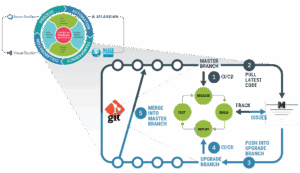
A flow chart showing the Continuous Modernization process


Implementing Continuous Modernization in your DevOps pipeline

Successful adoption of Continuous Modernization requires proactive, systematic processes and the right tooling. Here’s how mature CM practices typically integrate with existing workflows:

Automated upgrade branches

Continuous Modernization pipelines operate in dedicated upgrade branches, isolated from your main development codebase. This isolation is critical: it allows upgrade processes to run without any risk to production code or active development work.

When new software versions become available, automated systems pull your latest source code into upgrade branches and apply the necessary updates. This happens continuously in the background while your team continues normal development activities.

Integration with existing CI/CD testing

After upgrades are applied in the isolated branch, your standard regression test suites run automatically. This leverages all the testing infrastructure you’ve already built – unit tests, integration tests, end-to-end tests, and performance benchmarks.

If tests pass, the upgrade branch can be merged back into your main development line. If tests fail, the issues are logged, tracked, and remediated before any code reaches production.

Customizable upgrade rules

Every application and organization has unique requirements. An effective Continuous Modernization platform allows teams to customize the upgrade process. This usually means defining which dependencies to prioritize, establishing version constraints, specifying breaking change policies, and setting approval workflows.

These rules ensure the modernization process aligns with your organization’s risk tolerance and change management practices.

The business case for Continuous Modernization

While Continuous Modernization is fundamentally a technical practice, it delivers measurable business value:

Predictable maintenance costs: Regular, small updates cost less and are more predictable than emergency modernization projects. Finance teams appreciate the ability to budget for steady-state maintenance rather than lumpy capital investments.

Faster time-to-market: In one study, Stripe found that developers spend an average of 13.5 hours per week addressing technical debt, translating to 33% of their time spent on maintenance rather than shipping new features. When technical debt is kept under control, development teams spend more time shipping features and less time fighting antiquated tooling.

Reduced risk: Large-scale modernization projects are inherently risky: they touch many parts of the system simultaneously and often require extended testing periods. Continuous Modernization distributes that risk across many smaller, less risky changes.

Extended application lifespan: Custom applications represent significant investments. Continuous Modernization helps organizations maximize the return on those investments by keeping systems viable longer without requiring costly rewrites.

Getting started with Continuous Modernization

If your organization is dealing with aging custom applications, mounting technical debt, or expensive modernization cycles, it’s time to consider a Continuous Modernization approach.

Start by identifying applications that are critical to operations but beginning to show their age. Look for systems where dependencies are more than a few versions behind, security patches are piling up, or it’s becoming difficult to find engineers willing to work on outdated tech stacks.

These applications are ideal candidates for implementing Continuous Modernization pipelines. With the right platform and processes in place, you can transform them from growing liabilities into well-maintained, modern assets.

The shift to Continuous Modernization doesn’t happen overnight, but the investment pays dividends. Organizations that adopt CM spend less time in crisis mode and more time delivering value. They maintain more secure, stable, and sustainable application portfolios. And they position themselves to take advantage of new technologies and capabilities as they emerge, rather than being held back by ever-snowballing legacy technical debt.
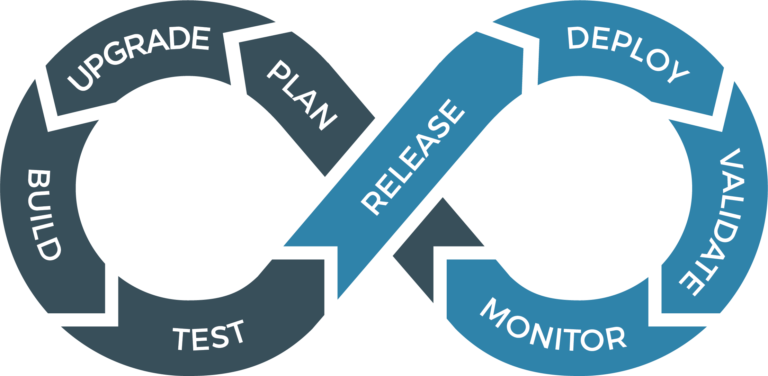

Continuous Modernization FAQ

What types of applications benefit most from Continuous Modernization?

Continuous Modernization is most valuable for business-critical custom applications that you plan to maintain long-term. This includes internal enterprise applications, customer-facing APIs, and proprietary platforms that are actively used but not under constant feature development. 

How is Continuous Modernization different from regular software maintenance?

Traditional software maintenance is reactive: teams address issues as they arise or tackle updates when they become urgent. Continuous Modernization is proactive and systematic, establishing automated processes that continuously evaluate and apply updates before they become problems. It’s the difference between regularly rotating your tires and changing your oil versus waiting until your car breaks down.

Does Continuous Modernization work with legacy applications?

Yes, although implementing Continuous Modernization for legacy applications may require some initial setup work. The first step typically involves getting the application into source control (if it isn’t already), establishing basic automated testing, and documenting dependencies. Once these foundations are in place, Continuous Modernization processes can be applied even to older systems. In fact, legacy applications stand to benefit the most from CM adoption since they typically carry the most technical debt.

How much does Continuous Modernization cost compared to periodic modernization projects?

While Continuous Modernization requires ongoing investment in tooling and processes, organizations typically find that regular, incremental updates cost significantly less than periodic, large-scale modernization initiatives – both in direct expenses and in the opportunity cost of stretched resources and delayed features. Additionally, costs become more predictable and can be budgeted as operational expenses rather than unpredictable capital projects.

Will Continuous Modernization break our applications?

When properly implemented, Continuous Modernization actually reduces the risk of breakage. In Synchrony Systems’ Modernization Lifecycle Platform (MLP), updates happen in isolated branches and go through full regression testing before merging. Issues are caught early when they’re easier to fix. Compare this to letting dependencies age for years and then attempting a massive update – the latter scenario is far more likely to cause unexpected problems.

How long does Continuous Modernization take?

By proactively performing regular, incremental updates, organizations avoid the need for painful, expensive “big bang” modernization projects. With Continuous Modernization, modernization cycles usually occur four times per year and take approximately 2-4 weeks. This includes automated dependency updates, code transformations, and full regression testing.

Can Continuous Modernization handle breaking changes in dependencies?

Yes. Sophisticated Continuous Modernization platforms can apply transformation rules to adapt code when dependencies introduce breaking changes. For complex breaking changes that require architectural decisions, the process pauses for human review and input. Teams can also establish policies around accepting major version updates versus sticking with minor and patch releases.

What happens when an update fails testing?

When an automated update fails regression testing, the issue is logged and tracked just like any other bug. The upgrade stays in the isolated branch and your main codebase is unaffected. Teams can investigate the failure, adjust upgrade rules if needed, or decide to skip that particular version and wait for the next release. This failure-and-remediation cycle happens safely, away from production code.

Do we need special tools to implement Continuous Modernization?

While you can cobble together Continuous Modernization processes using standard CI/CD tools and custom scripting, specialized platforms designed for Continuous Modernization –  like Synchrony’s Modernization Lifecycle Platform – make the process significantly more efficient and reliable. These platforms provide pre-built upgrade rules, customizable workflows, and integration with existing DevOps toolchains.

How does Continuous Modernization fit with our existing CI/CD pipeline?

Continuous Modernization runs parallel to your standard CI/CD pipeline rather than replacing it. Upgrade branches feed into your existing testing and deployment infrastructure. Most organizations find that Continuous Modernization enhances their DevOps practices rather than conflicting with them, adding another dimension of automation and reliability to their software delivery process.


Your IT budget is 80% maintenance — here’s how to optimize it

Most enterprise IT organizations allocate 60-80% of their IT budgets to maintaining legacy systems rather than innovating powerful new capabilities. This isn’t sustainable in a market where hyper-scalable, cloud-native technologies and architectures, coupled with the meteoric rise of generative AI, drive competitive advantages.

The root cause? Traditional application modernization approaches create a boom-bust cycle where small technology gaps snowball into massive, expensive system overhauls that consume entire teams for years.

Why IT budget optimization matters now

With pressure to innovate, reduce costs, and adopt emerging technologies, IT budget optimization has become a board-level priority. Every dollar spent keeping outdated systems alive is a dollar not invested in growth.

Organizations that modernize strategically can reduce IT maintenance costs, free up resources for innovation, and keep systems current without costly disruption.

The continuous modernization advantage

Leading organizations are adopting Continuous Modernization (CM) as an approach to IT budget optimization, treating technology updates as an ongoing process rather than periodic disruptions. This approach complements existing CI/CD practices by systematically applying incremental updates to applications, APIs, and software components before small gaps become major problems.

Synchrony Systems helps enterprises make this shift through its Modernization Lifecycle Platform (MLP), a system designed to keep legacy and modern technologies evolving side-by-side.

The methodology works by establishing parallel upgrade pipelines that test new versions of dependencies, frameworks, and platforms in isolated environments. Instead of allowing technical debt to accumulate until it necessitates a major overhaul, teams maintain currency through regular, small updates integrated into standard development workflows.

Deloitte’s 2025 Tech Trends report identifies AI as the common thread of nearly every enterprise technology trend. Organizations that use continuous modernization can systematically incorporate emerging technologies without the architectural disruption typically associated with traditional approaches.

Implementation patterns that lower maintenance costs

Successful continuous modernization implementations share common characteristics:

  • Automated Impact Analysis: Before any update, automated tools analyze potential effects on existing code, dependencies, and system integration points. This preview capability allows teams to understand implications before committing to changes.
  • Isolated Testing Environments: Updates occur in dedicated branches or environments that simulate production but pose no actual risk to operational systems. Teams can experiment, test, and iterate without affecting business operations.
  • Integration with Existing Workflows: Rather than requiring new processes, effective CM approaches integrate directly with established CI/CD pipelines. Development teams continue using familiar tools and workflows while gaining systematic modernization capabilities.
  • Customizable Update Rules: Different applications and business contexts require different modernization approaches. Leading platforms provide configurable rules that allow teams to tailor the modernization process to their specific requirements and risk tolerances.
  • Transparent Tracking and Rollback: Users have complete visibility into what changed, when, and why, along with reliable rollback capabilities when updates don’t perform as expected.

Industry adoption patterns

Enterprise technology adoption follows predictable stages: technical innovation, experimentation, initial pilots, business scaling, and full deployment. Organizations implementing continuous modernization are typically in the pilot or early scaling phases, gaining a competitive advantage while others struggle with traditional approaches.

Urgency is growing. Application modernization has become pivotal for businesses striving to enhance efficiency, agility, and competitiveness. Enterprise applications must modernize to replace existing procedures with more practical, adaptable, and scalable solutions.

Companies without systematic modernization strategies face mounting technical debt that eventually demands massive, disruptive overhauls — exactly what continuous modernization prevents.

Making the transition

The shift to continuous modernization requires both technical and organizational changes:
Technical Infrastructure: Establish parallel development pipelines, automated testing capabilities, and monitoring systems that can handle frequent, small changes rather than infrequent, large ones.

  • Team Skills: Development teams need familiarity with advanced automation tools, impact analysis techniques, and systematic upgrade processes.
  • Risk Management: Promote organizational comfort with continuous changes supported by robust rollback and monitoring capabilities, instead of sporadic revamps.
  • Governance Integration: Align with existing change management, security review, and compliance processes to ensure continuous updates don’t bypass necessary controls.

The path forward

Ready to implement continuous modernization? Start with pilot applications that represent typical technology stacks and business criticality levels. Success with initial implementations provides both technical learning and organizational confidence, paving the way for broader adoption.

The goal isn’t perfect implementation from day one. It’s establishing systematic processes that prevent the accumulation of technical debt while enabling rapid adoption of new technologies and capabilities.

Given the accelerating pace of enterprise technology change, the question isn’t whether to adopt continuous modernization, but how quickly you can implement it effectively across your application portfolio.


Synchrony Systems’ Modernization Lifecycle Platform (MLP) offers a unified approach, supporting systematic modernization across diverse technology stacks, including mainframe and EGL applications, as well as PowerBuilder and Smalltalk systems. Learn more about implementing continuous modernization for your organization here.

10 app modernization mistakes to avoid

Modernization promises the benefits of a modern, cloud-based tech stack, including remaining competitive, innovating quickly, supporting mobile, and reducing security risks. Yet app modernization initiatives are fraught with complexity. Sadly, over 75% of modernization projects fail, according to multiple studies conducted on mainframe and application modernizations.

Executives, architects, and technical teams must be aware of the warning signs that a modernization project is starting to go sideways. Here are ten app modernization mistakes to avoid to increase your chances of a successful initiative.

1. Shortcutting modernization readiness homework

The devil is in the details regarding app modernization. While limited documentation, technology expertise, or even historical context for changes in the legacy application are common problems, the more significant risk with application modernizations is the inability to scope the project properly. Making assumptions rather than conducting an actual modernization readiness assessment often leads to underestimating the size and complexity of the technical debt and, hence, the overall effort required for the modernization. As a result, the project is set up for failure before it even begins.

2. Treating application modernization like a typical software development project

Nothing could be further from the truth. These applications typically run critical parts of the business, and modernization efforts must be managed in parallel to support the day-to-day business operations. Unlike the typical greenfield development lifecycle, where many engineers make many small incremental changes to one program or function at a time, a modernization project makes wholesale changes to millions of lines of code simultaneously and repeatedly. Planning a modernization project like a greenfield project is a huge mistake.

3. Assuming a good migration tool is the only key to a successful modernization

Machine-driven migration tools are crucial to modernization projects, but they are just a part of a successful modernization project. These tools are akin to best-of-breed compilers and their role in greenfield application development. Yes, we need a good compiler, but without the well-established best practices of DevOps, no compiler by itself can ensure the successful completion of a software development project. So yes, we need good migration tools. Still, they must be integrated into holistic modernization processes that help bring migrated code to production quality, see it through to production release, and retire the legacy application.

4. Overreliance on code migration tools

Piggybacking on the above, teams always investigate the available code migration tools. Automated code transformation takes care of only a third of the work in a complex modernization project with many moving parts and stakeholders. Without integration of migration tools with CI/CD build pipelines, defect management, test management, code synchronization between parallel development and migration tracks, project management, analytics, reporting, and more, it will be impossible to successfully manage such complex projects and see them through to completion.

5. Underestimating the difficulty of modernizing a moving target

Applications that require modernization are often live/running systems that undergo development – bug fixes, enhancements, feature requests, integrations, etc. – based on the needs of the business. Halting development or freezing the application code isn’t feasible, especially when today’s modernization projects average sixteen to twenty-four months or more. The biggest Achilles heel of modernization is the inability to keep up with the rate of change happening to the application while it’s undergoing modernization.

6. Trying to modernize everything at the same time

The end-state is clear. A modernized application will use modern technology, be cloud- and mobile-ready, and embrace current UI/UX best practices. However, the system to be modernized is typically monolithic and was developed with what today would be considered obsolete software development practices. Trying to tackle this challenge all at once significantly increases the risk of failure as it drives up the demand on resources, time, and costs and ultimately erodes the trust of senior executives and project sponsors. Instead, develop a minimal viable product, or MVP, modernization roadmap. An incremental approach will still result in wholesale modernization, but it’s being done piecemeal. This incremental approach makes modernization more manageable, trackable, and measurable and de-risks the entire project.

7. Not having project visibility

Large-scale, complex application modernizations often require internal resources and several external partners with specific migration expertise. The work is usually managed via spreadsheets, Gantt charts, project management or collaboration tools, and constant status calls. Outside the project management activity, the modernization work occurs in various development environments siloed to the teams working in their particular areas. So, despite everyone’s best intentions, modernizations are fraught with miscommunication, delays, and project bloat, costing more money and time. These challenges must be acknowledged and addressed as part of the overall modernization strategy and, where possible, solved with modernization lifecycle management solutions.

8. Tracking the wrong modernization success metrics

Some metrics show project progress but may not be success indicators. For example, measuring the number of migrated lines of code or how much code compiles doesn’t mean the code is actually running. Additional metrics that track the progress of the modernization are how much code is executing or code coverage, the impact of a new version of a code drop, and the overall project trends.

9. Claiming victory too early

Once the modernized application is in production, it’s tempting to sunset the legacy application as quickly as possible. After all, maintaining legacy applications takes resources that could be deployed on other strategic initiatives. However, the modernized application must be exercised in production for enough time to ensure that the migrated code operates as expected in the day-to-day operations. Sunsetting the application too early prevents a quick remigration using updated automation rules and instead forces a development team to prioritize, schedule, and address these issues manually during a development sprint.

10. Ignoring employee impact

Modernization is more than technology. It often triggers a fundamental shift in development processes and team organization, with many companies adopting DevOps principles, cloud deployment, and modern development best practices. It’s a sea change for the developers who are maintaining the legacy application. Therefore, it is essential to consider and plan for the impact on employees post-modernization.

About Synchrony Systems and our app modernization technology

We have reimagined how application modernizations are executed. Our technology has helped some of the world’s largest brands with assessments, readiness analyses, roadmaps, application migrations, and application transformations. Contact us today to learn how we can help you.


Challenges of PowerBuilder modernization

PowerBuilder is best known for its rapid application development (RAD) capabilities, particularly for building data-driven client/server business applications. It’s estimated that billions of lines of PowerBuilder code are running applications in North America alone, let alone globally.

PowerBuilder is considered to be a 4GL language. Key features of 4GL are a higher level of programming abstraction that is then used to generate the code into a lower-level language such as C or C++ and extensive components embedded into the language itself or its built-in system library. PowerBuilder is more of the latter than the former. Its WYSIWYG IDE with its event-driven programming model and all-in-one DataWindow presentation with powerful yet simplified data access CRUD capability, including sorting, filtering, computed fields, reporting, and other capabilities, is what gave it its claim to fame in its heyday.

Today, companies are looking to transform these applications to web and cloud environments to reap the benefits of their ubiquity, scalability, and global adoption. But what are the actual challenges of taking working, bespoke production applications written in PowerBuilder and transforming them into modern stateless microfrontends and microservices web architectures deployed in secure and scalable cloud platforms? Our modernization experts share some of the critical technical challenges teams face when undertaking such an endeavor.

Challenges modernizing PowerBuilder applications

Architectural differences

Generally speaking, PowerBuilder applications use a client-server architecture where the client handles much of the business logic and the server manages database access. Web applications, on the other hand, follow a more distributed architecture, often involving web servers, application servers, and browser-based web clients.

Splitting a monolith, especially a client-server, standalone, stateful monolith, into a web architecture is not for the lighthearted. Key challenges are:

  • Refactoring and decoupling presentation layout and logic from the underlying business model and logic.
  • Extracting application services into the web server tier and replacing direct access with REST calls.
  • Identifying interdependencies, interwoven user interfaces, and business logic and properly splitting it to work in the web tier.
  • Removing dependencies on stateful data access, such as open cursors and long transactions.
  • Last but not least, re-implementing the decades-old reliable software in new, and often multiple, new modern programming languages.

General code migration challenges

Modern web applications often use frameworks such as Angular, React, or Vue.js. Integrating the PowerBuilder business logic and data access layers with these frameworks requires significant refactoring and a very heavy lift in the absence of automation and refactoring tools. While dealing with a single PowerBuilder language, often target architecture requires multiple languages – JavaScript on the client and/or Java or C# on the server. In addition, PowerBuilder uses its own scripting language, providing additional capabilities for manipulating data retrieved from databases that may require a complete redo or an equivalent custom interpreter that will implement the equivalent semantics and functionality on the web.

Type safety and validation

PowerBuilder’s dynamic data typing allows flexibility but can lead to runtime errors. Migrating to a statically typed language involves enforcing type safety throughout the application, requiring an upfront investment in defining interfaces, types, and classes for consistent data handling and error prevention. Validation is often embedded inside the DataWindow objects and must be shifted to a mid-tier or form validation in the browser.

User Interface (UI) transition

PowerBuilder applications use a desktop-style UI with windows and dialogs that don’t naturally translate to a reactive web layout, especially for DataWindow 4GL-like components. Web frontend frameworks such as React offer rich UI components. Still, those components do not have all the equivalent properties and presentation semantics offered by the PowerBuilder’s rich set of controls and visual components and certainly do not provide a DataWindow equivalent functionality. If a like-for-like outcome is chosen, an initial step of modernizing a PowerBuilder application will require an equivalent DataWindow compatibility component framework to be implemented in the target web UI framework. For a more comprehensive modernization with the objective of achieving a native web UI/UX target, a more granular approach is necessary to break down the underlying data window-dependent behavior into separate independent pieces of display/presentation behavior, corresponding data access and data binding, and reporting capabilities.

Data access

The DataWindow is the PowerBuilder superpower. Its abstraction includes presentation (drawing and displaying forms that can have both simple and complex widgets), data access that includes SQL or stored procedure invocation, data binding, and transactions. A more comprehensive approach is needed to achieve functional equivalence on the web target with a smart, well-integrated compatibility library that sits on top of existing frameworks such as React or Angular. Adapting the data access layer to work with web technologies involves changes in how database connections are managed. The main challenge is the proverbial “thin-client” architecture, which implies statelessness. It’s not just that we are using different technologies for session management, connection pooling, etc.; the underlying transformation of the monolith into a microservices and microfrontends web and cloud architecture is where the real challenge lies.

Session management paradigm shift

PowerBuilder applications often rely on the session state maintained within the client application. In a modern web application, managing the client state requires technologies like Redux or another persistent data store on the browser side. Moving from a primarily client-side state management model to a distributed client-server architecture requires careful consideration of data synchronization. Depending on the application’s needs, data consistency and responsiveness are often achieved using REST APIs or WebSockets.

Performance

Whether the application is modernized for the web or built ground up for the web, it comes with the web territory of potential network latency in user response times and scalability depending on the demands of the underlying application profile. When modernizing a client-server architecture to the web, there is also the risk of potential consequential database “chattiness.” Once the application has achieved functional equivalence, attention must be placed on performance, overall application deployment, and scalability.

Security

There are differences in security practices for client-server applications and web applications. One of the most challenging parts of a PowerBuilder modernization to the web is extracting the application logic and, most importantly, the data access in the form of SQL and stored procedure calls to a web service layer. Once successfully split, other security layers, such as secure authentication (e.g., MFA, SSO), authorization protocols (e.g., OAuth, SAML, JWT), and data encryption and secure transmission (e.g., HTTPS), become more straightforward.

Overcoming these challenges

Addressing these challenges requires careful planning and a comprehensive modernization strategy. A phased approach to modernizing the application while maintaining its core functionality and user experience is often the best. At Synchrony, we go by the slogan, “don’t let perfection stand in the way of progress.” With our in-house advanced analytical tools, powered by code refactoring and code generation automation, we help streamline an otherwise very complex undertaking by simplifying its inherent complexity, reducing the risks associated with group-up overhauls, and ensuring that modernizations achieve functional equivalence and are completed at a fraction of cost and time with the absence of advanced automation.

Contact us to discuss your specific modernization needs or if you’d like to learn more about our PowerBuilder modernization experience and expertise.

5 legacy system cybersecurity risks in 2025

Legacy systems, the reliable workhorses of the past, can become security nightmares in today’s ever-evolving threat landscape. While they may keep critical functions running smoothly, their outdated technology and lack of modern security features create vulnerabilities that cybercriminals are eager to exploit. Let’s explore five key ways legacy systems can significantly increase your cybersecurity risk:

1. Outdated security can’t keep up with modern threats.

Remember the massive Log4j vulnerability that shook the cybersecurity world in late 2021? Legacy systems, often running on unsupported operating systems or software versions, miss out on critical security patches like these. This exposes them to known vulnerabilities attackers can easily leverage to access sensitive data or disrupt operations.

2. Legacy dependencies on aging hardware and software.

Many legacy systems rely on outdated hardware and software for core functionalities. Not actively developed or supported, these components are often riddled with unaddressed security flaws. For a recent example highlighting the security risks posed by outdated software, the Adobe ColdFusion vulnerability CVE-2023-26360 case is a strong illustration. In 2023, threat actors actively exploited this flaw to breach systems, including two U.S. federal government agencies, targeting their outdated versions of ColdFusion. Hackers exploited this vulnerability to gain access, install malware, and perform reconnaissance activities on the compromised systems. However, prompt defensive measures thwarted lateral movement and data exfiltration.

3. Limited visibility into security posture.

Legacy systems often lack the built-in security features present in modern platforms. They may struggle to integrate with modern security tools like Security Information and Event Management (SIEM) systems, hindering the ability to have a comprehensive view of a company’s security posture. This lack of visibility makes detecting suspicious activity or potential breaches within the legacy system difficult.

4. Accidental exposure of internal applications.

As business needs evolve, internal applications running on legacy systems can unintentionally be exposed to the internet over time. This creates a direct path for attackers to target them. One example is the 2023 Microsoft Azure data leak, where sensitive internal data was accidentally exposed due to a misconfigured endpoint. This exposure allowed unauthorized users to access information meant to remain internal, underscoring how overlooked configurations in legacy systems and applications can lead to significant data security risks.

5. Slow integration of modern security solutions.

Legacy systems often require significant modifications or complete rewrites to incorporate modern security features like multi-factor authentication or data encryption. Migrating these applications to the cloud is often incremental, as each component needs modification to work securely in the new environment. Until these applications are fully adapted, they’re more vulnerable to attacks and may not benefit from the cloud provider’s built-in security features.

Modernization is the path to a stronger security posture.

Ultimately, a long-term plan for modernizing or replacing legacy systems is crucial for a robust cybersecurity posture. Synchrony’s Modernization Lifecycle Platform (MLP) supports this process by automating the migration and transformation process, enabling collaborative workflows, and offering clear, traceable insights into software modernization. Continuous Modernization (CM) complements DevOps practices like Continuous Delivery (CD) and Continuous Integration (CI) by allowing organizations to apply software updates consistently and incrementally. This method enables smooth upgrades across in-house applications, APIs, and other software components, regardless of underlying technologies, keeping security and functionality aligned with evolving needs.

Contact us to learn how we could help you modernize your legacy applications. 

Why modernize EGL applications?

Enterprise Generation Language (EGL) was a powerful tool in its time, but the technological landscape has evolved significantly. Modernizing EGL applications is crucial for businesses to remain competitive and agile.

Here are the primary reasons to modernize:

1. Improve user experience:

Outdated interfaces: EGL applications often have dated user interfaces that are not intuitive or mobile-friendly.
Enhanced user interaction: Modernization can create engaging, responsive interfaces that meet contemporary user expectations.

2. Increase efficiency and productivity:

Legacy systems bottlenecks: EGL applications might have performance limitations or scalability issues.
Automation: Modernizing can incorporate automation and AI to streamline processes and reduce manual effort.
Integration: New technologies enable seamless integration with other systems and data sources.

3. Reduce costs:

Maintenance overhead: Legacy EGL applications can be expensive to maintain due to limited skill sets and support.
Infrastructure costs: Modernization can reduce hardware and software costs by leveraging cloud-based solutions.

4. Enhance security:

Vulnerability risks: Older applications are often susceptible to security threats.
Compliance: Modernization can help meet industry regulations and data protection standards.

5. Unlock business opportunities:

Data-driven insights: Modernized applications can leverage big data and analytics for better decision-making.
Innovation: New technologies and platforms enable innovative products and services development.

6. Talent acquisition and retention:

Skill gap: Finding developers with EGL expertise can be challenging.
Attracting talent: Modernizing aligns the technology stack with current industry standards, making the company more attractive to skilled professionals.

7. Future-proofing the business:

Technological advancements: Staying up-to-date with technology is essential for long-term success.
Agility: Modern applications are more adaptable to changing business needs.

In essence, modernizing EGL applications is not just about updating the technology; it’s about transforming the business to be more efficient, competitive, and customer-centric.

We offer various solutions, including upgrades and transformations, to migrate your legacy EGL applications to a more modern architecture. Visit our EGL modernization page to learn more.

New experience report reveals details of modernizing six Smalltalk applications to Java

Company Saves Seven Years by Partnering with Synchrony Systems

Greenwich, CT (October 17, 2023) – Synchrony Systems, Inc., a technology pioneer for the management and execution of complex application modernizations, released an in-depth experience report on the modernization of six Smalltalk applications to Java. It describes the unique three-year collaboration between Synchrony and a German  IT services provider for the financial sector.


“This project provided an opportunity to turn the modernization experience on its head,” said Synchrony Systems CEO Slavik Zorin. “We co-developed a true collaborative approach that allowed the company’s engineering team to retain control and have complete visibility into all phases of the modernization process while allowing the application development and modernization to run in parallel. Together, we shrunk an estimated 10-year rewrite of well over two million lines of code down to three years.”  


“With Synchrony’s help, their advanced technology stack, and a strong team, we completed migrating all of our Smalltalk applications to the desired target Java architecture and were finally able to retire Smalltalk,” stated the company’s modernization project lead and veteran software developer. “We could not have done it without Synchrony’s technology, modernization expertise, and strong commitment to success.”


The Modernization Experience Report includes details such as:

  • company and project background
  • modernization initiative challenges, requirements, and vendor selection
  • Synchrony Smalltalk Migration Technology (SMT) and modernization platform overview
  • modernization readiness phase, including work breakdown, team collaboration, and project timeline
  • modernization implementation phase, including parallel track progress, halfway evaluation, functional testing, and code quality
  • final deliverable, conclusion, and takeaways
  • an appendix, including analysis of the codebase, pipelines, operations, deliveries, and more


This in-depth report is available for limited release to companies interested in understanding the details of modernizing large, legacy applications. Request your copy

Modernization Experience Report: Smalltalk Application Portfolio to Java

In-depth experience report shares how one company saved seven years by modernizing a portfolio of Smalltalk applications to Java with Synchrony Systems

Six Smalltalk applications to Java. The company estimated it would take another ten years to complete the portfolio modernization and retire Smalltalk altogether. 

This experience report goes behind the scenes to expose the unique three-year collaboration between Synchrony and a German IT services provider for the financial sector.

This in-depth report is available for limited release to companies interested in understanding the details of modernizing large, legacy applications.

Experience Report Table of Contents:
  • Company 
  • Project background
  • Modernization initiative (Challenges, Requirements, Vendor selection)
  • Synchrony Solutions (Smalltalk Migration Technology (SMT), Modernization Lifecycle Platform (MLP))
  • Modernization engagement
    • Readiness phase (Application portfolio, Work breakdown, Team collaboration, Project timeline)
    • Implementation phase (Splitting the work, Progress of parallel tracks, Progress of the entire project, Halfway point evaluation, Functional testing, Code quality, Integration testing, Final deliverable
    • Conclusions and take-a-ways
  • Appendix (Codebase, Pipelines, Operations, KB and CL, Issues, Deliveries, Datapoints)


Synchrony Systems wins the 2022 Digital Innovator Award from Intellyx

 Greenwich, CT (December 12, 2022) – Synchrony Systems, Inc., the leader in complex application modernizations, announced today that it won the 2022 Digital Innovator Award from Intellyx, a research analyst firm dedicated to digital transformation.


According to their press release, Intellyx bestows this award upon vendors who are the most disruptive and innovative firms in their space, putting a “spotlight on vendors worth watching.”


“It’s an honor to be recognized for the second time by Intellyx for our application modernization technology,” said Slavik Zorin, CEO of Synchrony Systems. “Intellyx recognizes the innovation and positive impact that Synchrony is making in modernizing how modernizations are done. We are thankful for our conversations with the Intellyx team and the insights we gain from those interactions.”


Synchrony is the developer of MLP, a platform-as-a-service that helps customers gain control over the management and execution of complex application modernizations, thus reducing company risks, improving team communication and collaboration, and accelerating the entire modernization initiative. MLP orchestrates automated processes end-to-end, tracks all modernization activities, and provides complete transparency of all modernization activities to stakeholders.


Application owners use MLP to accelerate their adoption of cloud, mobile, and new web technologies by fast-tracking and de-risking complex modernizations. Migration tool vendors grow their business by making their migration tools and services consumable by customers and system integrators through the platform. System Integrators increase their profit margins using MLP to orchestrate migration tools from multiple vendors and leverage MLP’s systematic, repeatable, and reliable processes to manage complex application modernization.


For more details on the award and other winning vendors in this group, visit the Fall 2022 Intellyx Digital Innovator awards page.


About Synchrony Systems, Inc.
Customers gain control over the management and execution of complex application modernizations using Synchrony Systems’ Platform-as-a-Service–MLP. MLP is an end-to-end solution that orchestrates automated migration and modernization processes, tracks all modernization activities, and provides complete transparency of all modernization activities to stakeholders. This results in reduced company risks, improved team communication and collaboration, and accelerated modernization initiatives. MLP was named a 2018 SIIA CODiE Awards finalist for Best DevOps Tool and a 2019 SIIA CODiE Award Finalist for Best Emerging Technology. Synchrony Systems has been named a Digital Innovator from Intellyx in 2021 and again in 2022.

Slavik Zorin of Synchrony Systems to present at Camp Smalltalk Supreme

Sessions include static-type inferencing Smalltalk for application code analysis and decoupling Smalltalk applications for GUI migration to popular web frameworks.

Greenwich, CT (May 16, 2022) – Synchrony Systems, Inc., a leading technology provider for managing legacy application migrations and modernizations, announced today that Slavik Zorin is speaking at Camp Smalltalk Supreme, a yearly conference focused on the Smalltalk programming language. The event is June 10-12, 2022, in Toronto, Canada, celebrating the language’s 50th birthday.


“Smalltalk’s versatility, simplicity, and elegance allowed developers to build sophisticated applications to manage and run business-critical processes,” said Slavik Zorin, CEO of Synchrony Systems. “Yet today’s advances in modern web technologies and industry’s demands for more interactive digital experiences have put Smalltalk applications under pressure. I’m looking forward to showcasing how our technology can preserve the value of Smalltalk applications while enabling interoperability with cloud and mobile application development best practices.”


On Friday, June 10, Zorin will present “Static-Type Inferencing Smalltalk for Application Code Analysis,” demonstrating a static type system in Smalltalk along with Synchrony’s type inferencing technology within their Smalltalk Modernization Technology (SMT).


On Sunday, June 12, Zorin will present “De-coupling Smalltalk Applications for GUI Migration to Popular Web Frameworks,” featuring case studies of commercial Smalltalk applications that underwent a Smalltalk GUI migration while preserving the back-end functionality and design.


Camp Smalltalk Supreme will also feature keynote sessions from Adele Goldberg and Dan Ingalls, two of the original Smalltalk creators at Xerox PARC.


For more information about the conference, visit the conference website at Camp Smalltalk Supreme.


About Synchrony Systems, Inc.

We help customers manage and accelerate application migration, modernization, and transformation through automation technology, assisted workflows, and seamless integration into CI/CD processes, enabling an iterative, continuous modernization approach with no halts in application development. Our Modernization Lifecycle Platform (MLP) is a scalable, cloud-based platform for managing and executing end-to-end migrations and modernizations of legacy IT applications to modern software architectures and platforms. MLP was named a 2021 Digital Innovator from Intellyx, 2019 SIIA CODiE Award Finalist for Best Emerging Technology, and 2018 SIIA CODiE Awards finalist for Best DevOps Tool.