Synchrony Systems CEO and co-founder Slavik Zorin has been recognized as a thought leader in the Forbes Technology Council, contributing insights across four expert panel roundups in 2026.
“In large systems, finding sensitive data is usually the easier part. The harder part is keeping enough context around each access: what business operation used it, who authorized the action, and where the data went next. Without that, teams end up reconstructing activity after the fact from incomplete evidence.”
“There is an assumption that aligning initiatives to business goals is enough. In large systems, that breaks down quickly. What matters is preserving the behaviors the business depends on. The first step is to identify and verify those behaviors so changes can be made without introducing unintended consequences.”
“One area is risk and compliance decision-making. These decisions have traditionally been based on fragmented views of system behavior. With AI and analytics, organizations can assemble a more complete picture across applications and environments, improving how risks are understood and how compliance is validated.”
“The real risk is invisible technical debt. Open AI models can generate code that appears correct but gradually diverges from the architecture of the system. At enterprise scale, those inconsistencies compound. Without governance, organizations risk automating the creation of technical debt.”
Slavik Zorin, co-founder & CEO of Synchrony Systems, is a legacy app modernization expert with 30+ years leading complex global projects.
…
At some point, most established organizations find themselves lost in what I call the “legacy maze.”
A routine system update breaks an unrelated function. Fixing that issue exposes another dependency no one remembers creating. A modernization roadmap that once looked sensible now stretches years into the future, while the people who truly understand the system are nearing retirement. Progress is slow, risk is high and every turn seems to reveal yet another dead end.
This is rarely a technology failure. It is almost always a leadership one. Legacy applications don’t collapse overnight. They accumulate complexity over decades. By the time executives feel the pain, the organization is already deep inside the maze.
Why modernization so often stalls
Many modernization efforts fail not because leaders underestimate the importance of technology, but because they overestimate how linear the journey will be.
Most core systems in large enterprises were built for a different era: batch processing rather than real-time decisions, stability rather than speed and internal users rather than customers. Over time, these systems were patched, extended and repurposed to meet new regulatory, operational and market demands. Business logic became embedded everywhere, often undocumented. Change one thing, and five others break.
From a leadership perspective, this creates three compounding risks:
• Operational drag: When applications can’t exchange data in real time, organizations compensate with manual workarounds. Decisions slow down. Opportunities are missed. Employees spend their time navigating systems instead of serving customers or improving the business.
• Risk concentration: Critical knowledge often lives in the heads of a shrinking group of specialists. When those employees leave or retire, fragility becomes institutional.
• Strategic paralysis: Leaders know the applications must change, but rip-and-replace feels too risky, too expensive and too disruptive. So modernization becomes a perpetual initiative, constantly funded with no end in sight.
In regulated industries such as financial services and insurance, where compliance deadlines and digital expectations collide, this tension becomes especially acute.
The false promise of a big-bang transformation
One of the most common traps executives fall into is assuming modernization must be all-or-nothing. Replace everything. Re-platform the entire enterprise. Emerge years later, transformed.
In reality, these efforts often stall under their own weight. Timelines stretch. Business requirements change midstream. Patience erodes before meaningful value is delivered.
The fact is that modernization is not an event. It is a managed, staged transformation that must deliver business value along the way.
From maze to map: principles that work
Organizations that successfully escape the legacy maze follow a consistent set of principles:
• Start with value, not systems. Instead of asking, “Which application do we modernize?”, ask, “Which business capabilities matter most right now?” Revenue engines, compliance-critical processes and customer-facing workflows are often the right starting points.
• Preserve what works. Legacy does not mean obsolete. Many older systems encode decades of domain expertise. The goal is not to discard that logic, but to liberate it. Making it more accessible, testable and adaptable.
• Modernize incrementally. Extract high-value functions into modular components that can evolve and be deployed independently without disrupting business operations. This reduces risk while delivering visible progress that creates early wins and builds momentum.
• Make progress measurable. Leaders and teams need to see tangible results. That means faster release cycles, improved user experiences and reduced dependency on scarce skills. These outcomes matter just as much as technical milestones and should be considered key performance indicators.
Using technology as a tool
Modern architectures matter in a modernization journey. But they are a means, not the main objective.
The real goal is alignment with how the business operates. Systems must evolve while the organization continues to serve customers, comply with regulations and compete in the market. Done well, modernization reduces risk over time rather than concentrating it into a single moment.
In practice, this often means running old and new systems side by side, shifting responsibility gradually as confidence grows. User experiences improve incrementally. Teams learn new ways of working without abandoning what already functions.
What executives should ask before starting
Before approving another modernization initiative, senior leaders should ask:
• Will this deliver measurable business value within the first year?
• Can we modernize without betting the company on a single cutover?
• Are we reducing dependency on scarce skills?
• How will we measure progress quarter by quarter?
If the answers are vague, the organization may already be wandering deeper into the maze.
The way out
Legacy systems are not going away and are not embarrassments to hide. They are assets that powered decades of growth.
Escaping the legacy maze doesn’t require heroic rewrites or an overnight transformation. It requires a map: clarity where the value lives, willingness to move in stages and the discipline to modernize without disrupting the business.
For leaders who take that approach, modernization becomes less about a technology project and becomes what it truly is: a strategy for restoring agility, resilience and confidence in the systems that run the enterprise.
This interview with Cynthia Corsetti and Synchrony CEO Slavik Zorin was originally published by Authority Magazine. You can read the original article here.
…
Digital transformation has become a crucial component for businesses striving to stay competitive and relevant in today’s rapidly evolving landscape. As technology continues to shape industries and redefine business models, companies must adapt and leverage digital tools and strategies to unlock new opportunities for growth and innovation. In this interview series, we aim to explore various aspects of digital transformation, including best practices, challenges, success stories, and expert insights. We are talking to thought leaders, industry experts, entrepreneurs, technology innovators, and executives who have firsthand experience in driving digital transformation initiatives within their organizations.
As part of this series, we had the pleasure of interviewing Slavik Zorin.
Slavik Zorin is CEO & Co-Founder of Synchrony Systems — he is a recognized expert in legacy application modernization with more than 30 years of hands-on experience leading complex projects across financial services, insurance, government, and global enterprises. Slavik is the visionary behind Modernization Lifecycle Management and Synchrony’s Modernization Lifecycle Platform (MLP). His work enables organizations to transform legacy systems into modern architectures with speed, accuracy, and traceability.
…
Thank you so much for joining us in this interview series. Before we dive in, our readers would love to “get to know you” a bit better. Can you tell us a bit about your ‘backstory’ and how you got started?
Hi, Cynthia! Thank you for having me today to share my background and discuss the digital transformation space. My company, Synchrony Systems, helps businesses upgrade their old, critical software systems to modern, efficient platforms. We use a combination of automation and AI-assisted tools to ensure the transition is smooth, cost-effective, and minimizes disruption to daily operations.
I often say my entire career has been lived in the before-and-after of software. I started as an independent consultant in the early days of software development, working with a programming language called Smalltalk. This led to a partnership with IBM, where we helped companies move their systems into IBM’s environment. Our first major project in the early 90s showed us the need for automation, and we began developing tools to make these transitions smoother.
As the industry evolved, we had to continually reinvent ourselves, learning each new technology wave. Those experiences ultimately shaped our focus today: orchestrated, low-risk legacy application modernization through our Modernization Lifecycle Platform (MLP).
In essence, my journey has centered on turning outdated systems into modern, efficient applications that keep businesses moving forward.
Can you share a story about the funniest mistake you made when you were first starting? Can you tell us what lessons or ‘takeaways’ you learned from that?
Back in the early days of our company in the late 90s/early 2000s, when we were still transitioning from being a pure Smalltalk shop into a modernization and migration firm, I was asked to deliver a highly customized three‑day training course for one of our biggest financial clients at the time. Their chief architect, an incredibly bright and respected leader, had spent years building an advanced new framework for their commercial loan system. My job was to train their engineers how to use it.
Because the material was complex and the timeline was impossibly tight, I pulled multiple all‑nighters building the course and preparing the printed materials. By the time the first day of training arrived, I had been awake far longer than any sane human should have been. And, then it happened. In the middle of delivering the course, right there in front of the client and their entire technical team, I fell asleep. Literally nodded off mid‑session.
Our client, thankfully understanding just how much effort had put into preparing the training, quietly took over the class while I slept… in front of everyone. During a break, I realized what had happened. I sat red‑faced, while the room full of engineers tried politely, and unsuccessfully, not to laugh.
The good news? The training went on and the relationship didn’t just survive. It thrived for years afterward. They even eventually hired us to migrate to the very system they once tried to rewrite themselves. One big takeaway from that experience is that strong relationships can help you weather even the most embarrassing moments.
None of us are able to achieve success without some help along the way. Is a particular person who you are grateful for who helped get you to where you are? Can you share a story?
From the very beginning, I built this company alongside my wife, Regena, who has been an essential partner in every sense. While I focus on the engineering and technical vision, she oversees the entire business backbone. From running finance, legal, contracting, accounting, and HR, she essentially manages all of the operational infrastructure that keeps us moving forward.
In addition, our Synchrony team is made up of talented engineers and long‑tenured experts. Even as a small company where everyone wears multiple hats, our employees and contractors form a group of highly skilled, engineering‑driven teams that have grown alongside the company’s evolving modernization mission.
Is there a particular book, podcast, or film that made a significant impact on you? Can you share a story or explain why it resonated with you so much?
A thinker who had a huge impact on me was author and journalist, Christopher Hitchens. I discovered him by accident through a debate podcast, and I was immediately blown away by his intellect, independence, and clarity of thought. I ended up listening to everything he ever recorded and reading all his books. His ability to stand his ground, think deeply, and communicate honestly has shaped how I approach conversations, decisions, and relationships both personally and in business.
Are you working on any new, exciting projects now? How do you think that might help people?
What excites me most right now is the evolution of our Modernization Lifecycle Platform (MLP). MLP is our proprietary platform designed to help organizations upgrade their old applications in a structured and transparent way. It covers everything from analyzing the current system to transforming the code, testing, and deploying the new system. By standardizing this process and integrating automation, MLP significantly reduces the risks and costs that usually come with modernization projects.
The next evolution of MLP is particularly exciting because it introduces AI-assisted tools to support in the initial modernization readiness assessment phase of the process. The goal is to make modernization something companies can manage confidently, without it being a disruptive, once-a-decade crisis. This evolution empowers businesses to keep up with new technologies and digital demands, all while ensuring their critical systems continue running smoothly behind the scenes.
Thank you for all that. Let’s now turn to the main focus of our discussion about Digital Transformation. Digital transformation can mean many things to many people, from your perspective, how do you define digital transformation in your industry?
For us, digital transformation means modernizing mission‑critical legacy applications. That means transforming outdated systems into modern, scalable technologies that better support today’s digital business demands. What’s unique to Synchrony is our focus on the core systems the business actually runs on. Many of these systems were built decades ago in languages like Smalltalk, PowerBuilder, EGL, and mainframe environments. Long before Zero Trust security, modern architectures, or continuous delivery existed.
It’s similar to home improvement. You can’t just upgrade the aesthetics — you have to maintain and correct old wiring, plumbing, insulation, and other invisible aspects that keep the home running. When modernization is done correctly, organizations benefit from stronger cybersecurity, more automated compliance, and more interoperability and extensibility that support continuous improvement.
Which companies can most benefit from a Digital Transformation?
Any company that is running important business operations on decades-old applications and software will benefit from a digital transformation. Across the globe, this is a frequent issue in financial services, government, insurance, utilities, higher-ed and healthcare sectors. Companies in those industries are often particularly vulnerable to retiring experts, increasing maintenance costs, growing regulatory demands, and systems that are difficult to integrate with modern platforms. Neglecting these systems leads to compounding technical debt that can put your whole enterprise at risk.
Has integrating Digital Transformation been a challenging process for some companies? What are the challenges? How do you help resolve them?
Most companies underestimate the complexity of their legacy systems, and we often see the same issues crop up repeatedly.
One common problem is decision paralysis and delay. Organizations know they need to modernize, but they keep delaying it. Those delays also mean these critical projects often lose internal champions to turnover and attrition, stalling momentum.
Overconfidence in in-house rewrites is another frequent challenge. Many companies underestimate the complexity of modernization and assume their in-house teams can handle it alongside their other responsibility. This leads to multi-year delays, blown budgets and no cohesive plans. Or, similarly, they rely too heavily on AI tools that aren’t equipped to properly handle such an enormous task.
Finally, perhaps the most frustrating challenge we see is when the true cost of technical debt is discovered too late. Deferred maintenance turns the already challenging task of modernization into a cost-prohibitive crisis.
Our platform and approach are specifically designed to address these challenges and help businesses modernize quickly without the disruption to the business that comes from fully rewriting their applications.
Ok. Thank you. Here is the primary question of our discussion. Based on your experience and success, what are “Five Ways a Company Can Use Digital Transformation To Take It To The Next Level”? Please share a story or an example for each.
1. Make Legacy Systems Intelligible Before You Touch Them
The biggest mistake companies make is jumping straight into rewriting or replacing systems they don’t fully understand. The first step is always a deep analysis: counting screens, functions, dependencies, integrations, and understanding how the application actually behaves in production. This creates a data-driven foundation for planning.
For example, in our modernization projects, we ingest millions of lines of existing code and generate a complete application inventory. This approach keeps estimates within 20–30% of reality, instead of being off by 300–400% like many manual rewrites.
2. Use Orchestrated, Automated Modernization, Not Risky Rewrites
Manual rewrites are slow, risky, and nearly impossible to estimate accurately. Orchestrated, rules-based automation gives you consistency, traceability, and repeatability. Our tools function like compilers: we take legacy code as input and generate modernized equivalents, reducing both cost and risk.
For instance, our earliest work with IBM on Smalltalk migrations taught us this valuable lesson. By building migration tools instead of relying on manual rewrites, IBM was able to resell our software for large projects where automation dramatically reduced project timelines and improved predictability. They built over a $100 million modernization business that our technical solutions were a part of.
3. Modernize What Matters — And Keep In Mind, Not Everything Matters
Not all legacy logic is bad. Some should be preserved, some refactored, and some removed entirely. Selective modernization minimizes disruption while maximizing ROI. It focuses effort on the parts of the system that matter most to the business.
For instance, applying Pareto’s Principle often reveals that roughly 20% of an application delivers 80% of its business value. By modernizing that high‑impact portion first, organizations can deliver results faster, reduce risk, and avoid rewriting low‑value areas. This targeted approach creates early wins by modernizing a heavily used functionality without taking on the full cost and complexity of modernizing the entire system at once.
4. Adopt Continuous Modernization to Control Technical Debt
Instead of waiting until systems become dangerously outdated, organizations should integrate incremental updates into their regular development workflow. Continuous Modernization (CM) reduces upgrade complexity, improves security, and prevents technical debt from snowballing.
To illustrate, in the CM model, upgrades run in isolated branches and are automatically tested. Issues are caught early, when they’re smaller and less expensive, rather than discovered years later when outdated dependencies force a massive overhaul. This approach can extend the lifespan of mission-critical systems while keeping costs predictable.
5. Treat Security as an Architectural Outcome, Not a Patch Job
Legacy systems were never designed for Zero Trust security, identity-centric access, or real-time observability. Modernization makes systems visible, traceable, and structurally capable of continuous security and compliance. You can’t secure what you can’t see.
Consider the following example. We work with companies to modernize legacy platforms that have become opaque and tightly coupled. By moving to service‑based architectures with clear trust boundaries and least‑privilege access, they shift from reactive patching to security that’s engineered, validated, and auditable.
In your opinion, how can companies best create a “culture of innovation” in order to create new competitive advantages?
A culture of innovation starts with accepting a simple reality that today’s modern system is tomorrow’s legacy. If teams focus on this mission, innovation becomes a continuous discipline rather than a one-time initiative.
From our experience, companies innovate best when they treat modernization like engineering and not improvising. This means transparent workflows, measurable progress, clear architecture, and tools that help teams understand their systems. Our platform makes all modernization activity visible, from test results to automation runs, to defect patterns, which encourages learning and faster iteration.
Innovation thrives when teams feel empowered to evolve systems continuously, supported by data, tooling, and processes that reduce risk and uncertainty.
Can you please give us your favorite “Life Lesson Quote”? Can you share how that was relevant to you in your life?
A quote I often come back to is: “Today’s state of the art system is tomorrow’s legacy.”
After 30 years in this field, I’ve seen every modern platform eventually become the next modernization challenge: Smalltalk, EGL, PowerBuilder, and early Java frameworks. That reality shaped my entire career. It taught me to treat modernization as something continuous and engineered, not a one-time event. It’s why we built structured tools, automation, and ultimately a full Modernization Lifecycle Platform to help organizations evolve without losing the functionality and the underlying value embedded in their systems. For me, this quote is a reminder to stay adaptable. No matter how advanced a system looks today, it will eventually be tomorrow’s legacy system.
How can our readers further follow your work?
You can follow me on LinkedIn and also go to sync-sys.com and visit our blog to learn more about Application Modernization and the digital transformation.
Thank you so much for sharing these important insights. We wish you continued success and good health!
…
About The Interviewer: Cynthia Corsetti is a CEO and Executive Coach. She is the founder of CC consulting and the host of the podcast, “The Only CEO”. Cynthia has been featured in numerous publications and has been a guest on dozens of podcasts and radio shows. Cynthia helps CEO’s and other c-suite executives to increase their impact, influence, and productivity. She helps clients develop a clear vision, strategy, and roadmap to achieve their goals. Her clients include both new and experienced leaders, as well as those transitioning to new roles. Cynthia holds an MBA from Harvard Business School and a BA from the University of California, Berkeley. She is a certified coach and a member of the International Coach Federation.
When was the last time your development team proposed a major software modernization project?
If it feels like you’re always either planning one, executing one, or recovering from one, the true problem may lie in your approach to modernization.
Most organizations discover their technical debt only after it’s metastasized: when security vulnerabilities force urgent patches, when critical dependencies reach end-of-life, or when talented developers refuse to work on outdated tech stacks. By then, what started as deferred maintenance has ballooned into a protracted six-figure overhaul.
Is adopting a Continuous Modernization (CM) approach the only surefire way to prevent an avalanche of technical debt?
What is Continuous Modernization?
Continuous Modernization is a proactive software maintenance strategy that systematically updates your proprietary applications, APIs, and internal software components as part of your regular development workflow. Rather than allowing dependencies to age until they require massive overhaul projects, CM integrates incremental updates directly into your existing DevOps processes.
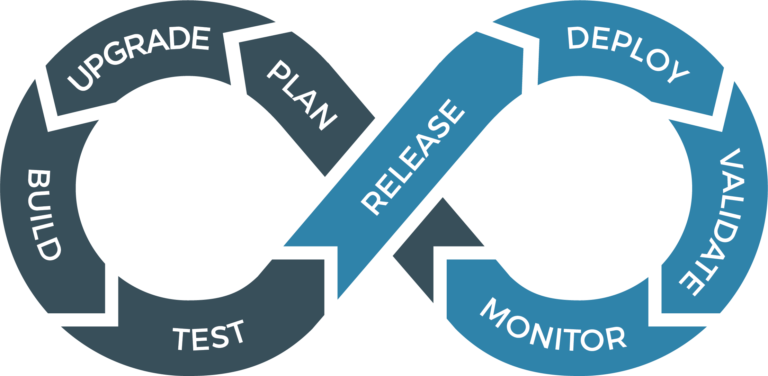
Continuous Modernization is a natural extension of CI/CD practices. Just as Continuous Integration and Continuous Deployment automate testing and releases, Continuous Modernization automates the process of keeping your technology stack current with the latest versions of databases, frameworks, SDKs, and third-party libraries.
The hidden cost of deferred updates
Here’s a scenario that plays out repeatedly across enterprise IT departments: an application launches successfully with modern dependencies. Development teams move on to new projects. Months pass, then years. Meanwhile, that once-current application quietly falls behind. What begins as a minor version lag – perhaps staying on an older database driver or postponing a framework update – compounds over time. Before long, your “stable” application is running on unsupported software versions with known security vulnerabilities and compatibility issues.
When the gap becomes too wide to ignore, you’re forced to launch a major modernization initiative. Development resources that should be building revenue-generating features instead get redirected to upgrade work that delivers no visible value to stakeholders. The maintenance burden that was once manageable has transformed into an expensive, high-risk project.
McKinsey finds that technical debt accounts for roughly 40% of IT balance sheets – and adds 10-20% to the costs of any given IT project.
How Continuous Modernization prevents tech debt accumulation
Continuous Modernization flips this reactive approach on its head. Instead of waiting until upgrades become emergencies, organizations establish automated pipelines that handle updates incrementally and continuously.
The process works by running parallel upgrade tracks alongside your standard development workflow. When new versions of dependencies become available, they’re automatically tested against your codebase in isolated environments. Issues are identified early when they’re still small and manageable, rather than discovering compatibility problems years later when dozens of dependencies demand simultaneous updates.
This approach delivers several key advantages:
Smaller, manageable changes: Updating one or two dependencies at a time is significantly less risky than upgrading an entire stack simultaneously. Each change can be thoroughly tested and validated before moving forward.
Reduced upgrade complexity: When applications stay relatively current, upgrade paths remain straightforward. The documentation and community support for recent version transitions is robust, and breaking changes are well documented.
Lower resource requirements: Small, regular updates require far less time and effort than infrequent, massive overhauls that grind productivity to a halt. Teams can handle modernization work within normal cycles rather than requiring dedicated projects.
Improved security posture: Security patches and vulnerability fixes get applied promptly rather than languishing in a backlog of deferred maintenance work.
Better developer experience: Engineers spend less time wrestling with legacy technology and more time working with modern tools and patterns.
Implementing Continuous Modernization in your DevOps pipeline
Successful adoption of Continuous Modernization requires proactive, systematic processes and the right tooling. Here’s how mature CM practices typically integrate with existing workflows:
Automated upgrade branches
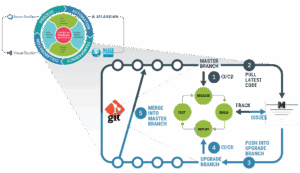
Continuous Modernization pipelines operate in dedicated upgrade branches, isolated from your main development codebase. This isolation is critical: it allows upgrade processes to run without any risk to production code or active development work.
When new software versions become available, automated systems pull your latest source code into upgrade branches and apply the necessary updates. This happens continuously in the background while your team continues normal development activities.
Integration with existing CI/CD testing
After upgrades are applied in the isolated branch, your standard regression test suites run automatically. This leverages all the testing infrastructure you’ve already built – unit tests, integration tests, end-to-end tests, and performance benchmarks.
If tests pass, the upgrade branch can be merged back into your main development line. If tests fail, the issues are logged, tracked, and remediated before any code reaches production.
Customizable upgrade rules
Every application and organization has unique requirements. An effective Continuous Modernization platform allows teams to customize the upgrade process. This usually means defining which dependencies to prioritize, establishing version constraints, specifying breaking change policies, and setting approval workflows.
These rules ensure the modernization process aligns with your organization’s risk tolerance and change management practices.
The business case for Continuous Modernization
While Continuous Modernization is fundamentally a technical practice, it delivers measurable business value:
Predictable maintenance costs: Regular, small updates cost less and are more predictable than emergency modernization projects. Finance teams appreciate the ability to budget for steady-state maintenance rather than lumpy capital investments.
Faster time-to-market: In one study, Stripe found that developers spend an average of 13.5 hours per week addressing technical debt, translating to 33% of their time spent on maintenance rather than shipping new features. When technical debt is kept under control, development teams spend more time shipping features and less time fighting antiquated tooling.
Reduced risk: Large-scale modernization projects are inherently risky: they touch many parts of the system simultaneously and often require extended testing periods. Continuous Modernization distributes that risk across many smaller, less risky changes.
Extended application lifespan: Custom applications represent significant investments. Continuous Modernization helps organizations maximize the return on those investments by keeping systems viable longer without requiring costly rewrites.
Getting started with Continuous Modernization
If your organization is dealing with aging custom applications, mounting technical debt, or expensive modernization cycles, it’s time to consider a Continuous Modernization approach.
Start by identifying applications that are critical to operations but beginning to show their age. Look for systems where dependencies are more than a few versions behind, security patches are piling up, or it’s becoming difficult to find engineers willing to work on outdated tech stacks.
These applications are ideal candidates for implementing Continuous Modernization pipelines. With the right platform and processes in place, you can transform them from growing liabilities into well-maintained, modern assets.
The shift to Continuous Modernization doesn’t happen overnight, but the investment pays dividends. Organizations that adopt CM spend less time in crisis mode and more time delivering value. They maintain more secure, stable, and sustainable application portfolios. And they position themselves to take advantage of new technologies and capabilities as they emerge, rather than being held back by ever-snowballing legacy technical debt.
Continuous Modernization FAQ
What types of applications benefit most from Continuous Modernization?
Continuous Modernization is most valuable for business-critical custom applications that you plan to maintain long-term. This includes internal enterprise applications, customer-facing APIs, and proprietary platforms that are actively used but not under constant feature development.
How is Continuous Modernization different from regular software maintenance?
Traditional software maintenance is reactive: teams address issues as they arise or tackle updates when they become urgent. Continuous Modernization is proactive and systematic, establishing automated processes that continuously evaluate and apply updates before they become problems. It’s the difference between regularly rotating your tires and changing your oil versus waiting until your car breaks down.
Does Continuous Modernization work with legacy applications?
Yes, although implementing Continuous Modernization for legacy applications may require some initial setup work. The first step typically involves getting the application into source control (if it isn’t already), establishing basic automated testing, and documenting dependencies. Once these foundations are in place, Continuous Modernization processes can be applied even to older systems. In fact, legacy applications stand to benefit the most from CM adoption since they typically carry the most technical debt.
How much does Continuous Modernization cost compared to periodic modernization projects?
While Continuous Modernization requires ongoing investment in tooling and processes, organizations typically find that regular, incremental updates cost significantly less than periodic, large-scale modernization initiatives – both in direct expenses and in the opportunity cost of stretched resources and delayed features. Additionally, costs become more predictable and can be budgeted as operational expenses rather than unpredictable capital projects.
Will Continuous Modernization break our applications?
When properly implemented, Continuous Modernization actually reduces the risk of breakage. In Synchrony Systems’ Modernization Lifecycle Platform (MLP), updates happen in isolated branches and go through full regression testing before merging. Issues are caught early when they’re easier to fix. Compare this to letting dependencies age for years and then attempting a massive update – the latter scenario is far more likely to cause unexpected problems.
How long does Continuous Modernization take?
By proactively performing regular, incremental updates, organizations avoid the need for painful, expensive “big bang” modernization projects. With Continuous Modernization, modernization cycles usually occur four times per year and take approximately 2-4 weeks. This includes automated dependency updates, code transformations, and full regression testing.
Can Continuous Modernization handle breaking changes in dependencies?
Yes. Sophisticated Continuous Modernization platforms can apply transformation rules to adapt code when dependencies introduce breaking changes. For complex breaking changes that require architectural decisions, the process pauses for human review and input. Teams can also establish policies around accepting major version updates versus sticking with minor and patch releases.
What happens when an update fails testing?
When an automated update fails regression testing, the issue is logged and tracked just like any other bug. The upgrade stays in the isolated branch and your main codebase is unaffected. Teams can investigate the failure, adjust upgrade rules if needed, or decide to skip that particular version and wait for the next release. This failure-and-remediation cycle happens safely, away from production code.
Do we need special tools to implement Continuous Modernization?
While you can cobble together Continuous Modernization processes using standard CI/CD tools and custom scripting, specialized platforms designed for Continuous Modernization – like Synchrony’s Modernization Lifecycle Platform – make the process significantly more efficient and reliable. These platforms provide pre-built upgrade rules, customizable workflows, and integration with existing DevOps toolchains.
How does Continuous Modernization fit with our existing CI/CD pipeline?
Continuous Modernization runs parallel to your standard CI/CD pipeline rather than replacing it. Upgrade branches feed into your existing testing and deployment infrastructure. Most organizations find that Continuous Modernization enhances their DevOps practices rather than conflicting with them, adding another dimension of automation and reliability to their software delivery process.